The Connection Between Planets and Human Life
One of the most common questions people ask is: What is the relationship between planets and human beings? How can celestial bodies located millions of kilometers away have anything to do with the events and experiences of human life?
At first glance, the idea may seem mysterious. However, when we observe nature carefully, we realize that the universe is deeply interconnected.
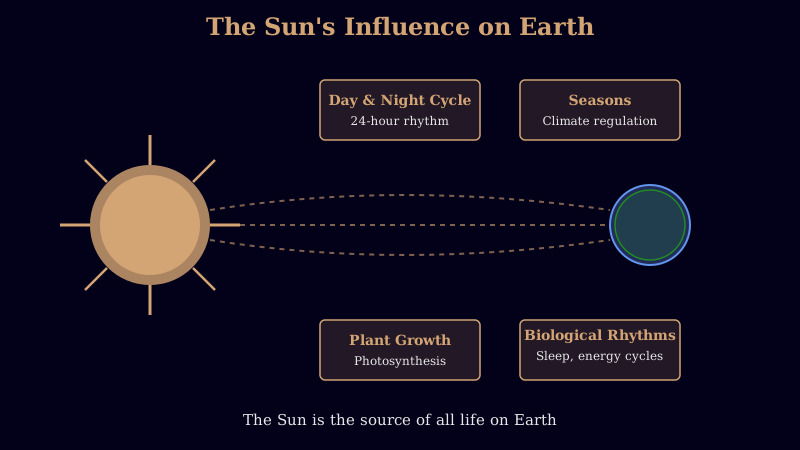
The Sun: The Source of All Life
The most obvious example is the Sun, the source of all life on Earth. The Sun governs the cycle of day and night, drives the seasons, regulates climate, and sustains plant growth. The biological rhythms of humans and animals are also closely linked to the Sun's light and energy.
The Moon: Governing Natural Cycles
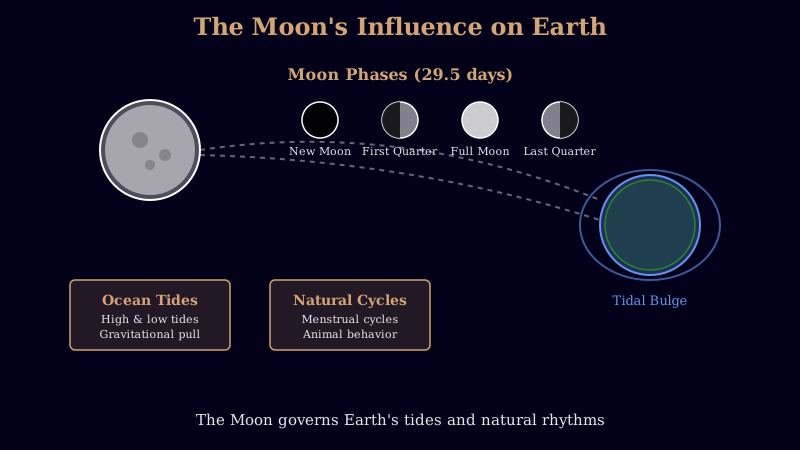
The Moon provides another clear example. Science itself confirms that the Moon influences the oceans through its gravitational pull, creating the tides. It also affects several natural cycles on Earth.
If celestial bodies like the Sun and Moon can influence life on our planet, it is reasonable to consider that other planets in our solar system may also participate in the larger cosmic rhythm that surrounds us.
Astrology: A Cosmic Language
Astrology views the planets not as forces that directly control human actions, but as cosmic indicators that reflect the subtle patterns of nature. Just as a clock shows the time without creating it, planetary positions symbolize the timing and unfolding of events in human life.
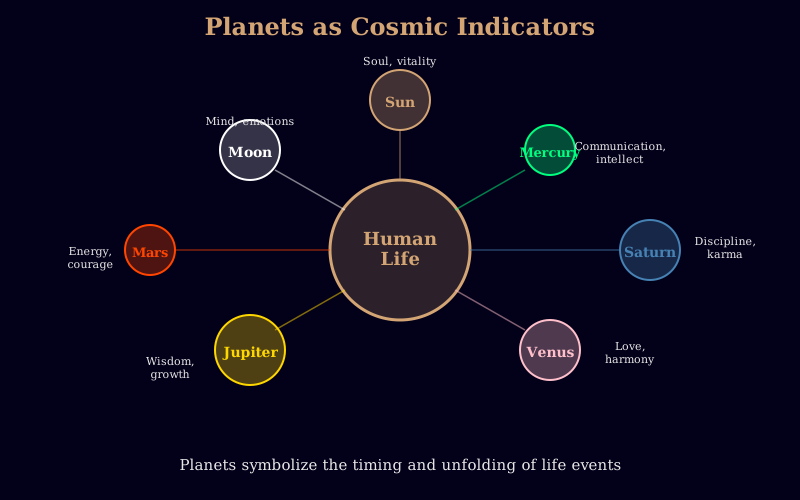
Through centuries of observation, astrologers have recognized meaningful correlations between planetary movements and human experiences. Planets such as Mars, Jupiter, Venus, Mercury, and Saturn are therefore used as symbolic guides to understand personality, tendencies, opportunities, challenges, and the different phases of life.
In this way, astrology becomes a language of the cosmos — a system that helps us interpret the connection between the universe and human existence.